


Scope of Work
This conceptual masterplan was developed for a 10-hectare site located in the Esil District of Astana, Kazakhstan. The project explores the relationship between contemporary urban life and the cultural origins of the Central Asian steppes, seeking spatial references rooted in the historical living patterns of early Turkic civilizations.
As a fundamental element of nomadic life in the steppe, the yurt was studied not only as an architectural form but as a spatial and social system shaped by climate, movement and collective living. Inspired by these principles, the project reinterprets the idea of the yurt within a contemporary urban context, translating notions of shelter, gathering and continuity into modern architectural and landscape strategies.
Three alternative concepts were developed, each proposing a different interpretation of how landscape, architecture and public life can emerge from the land and evolve into a contemporary urban center. The proposals integrate hospitality, residential and commercial functions while establishing a strong public realm and a recognizable urban identity connected to the cultural memory of the region.
♦ Conceptual masterplan development for a 10-hectare mixed-use site in Astana ♦ Cultural and spatial research based on early Turkic settlement patterns ♦ Interpretation of the yurt as a contemporary architectural and urban reference ♦ Development of three alternative urban and architectural concepts ♦ Integration of hotel, residential and commercial functions ♦ Landscape-driven spatial organization and public space design ♦ Definition of central squares and social gathering areas ♦ Pedestrian circulation and urban connectivity strategies ♦ Flexible planning scenarios adaptable to future development phases
Project Videos
Project Photos - Concept 01
The first concept takes inspiration from the movements of the earth’s surface and the cracks formed through compression and natural deformation. These fractures are translated into spatial elements that shape the masterplan, forming a primary urban rift that organizes pedestrian circulation and commercial activity across the site. Secondary fractures generate building masses, inner courtyards and public spaces, creating a dynamic relationship between landscape and architecture. The main rift evolves into a social and commercial spine, supporting recreational platforms and active urban edges. Architectural forms emerging from this fractured landscape symbolize the transformation of civilization from the land toward contemporary urban life, reinforced through references to traditional Turkish geometric motifs interpreted in a contemporary manner.




Project Photos - Concept 02
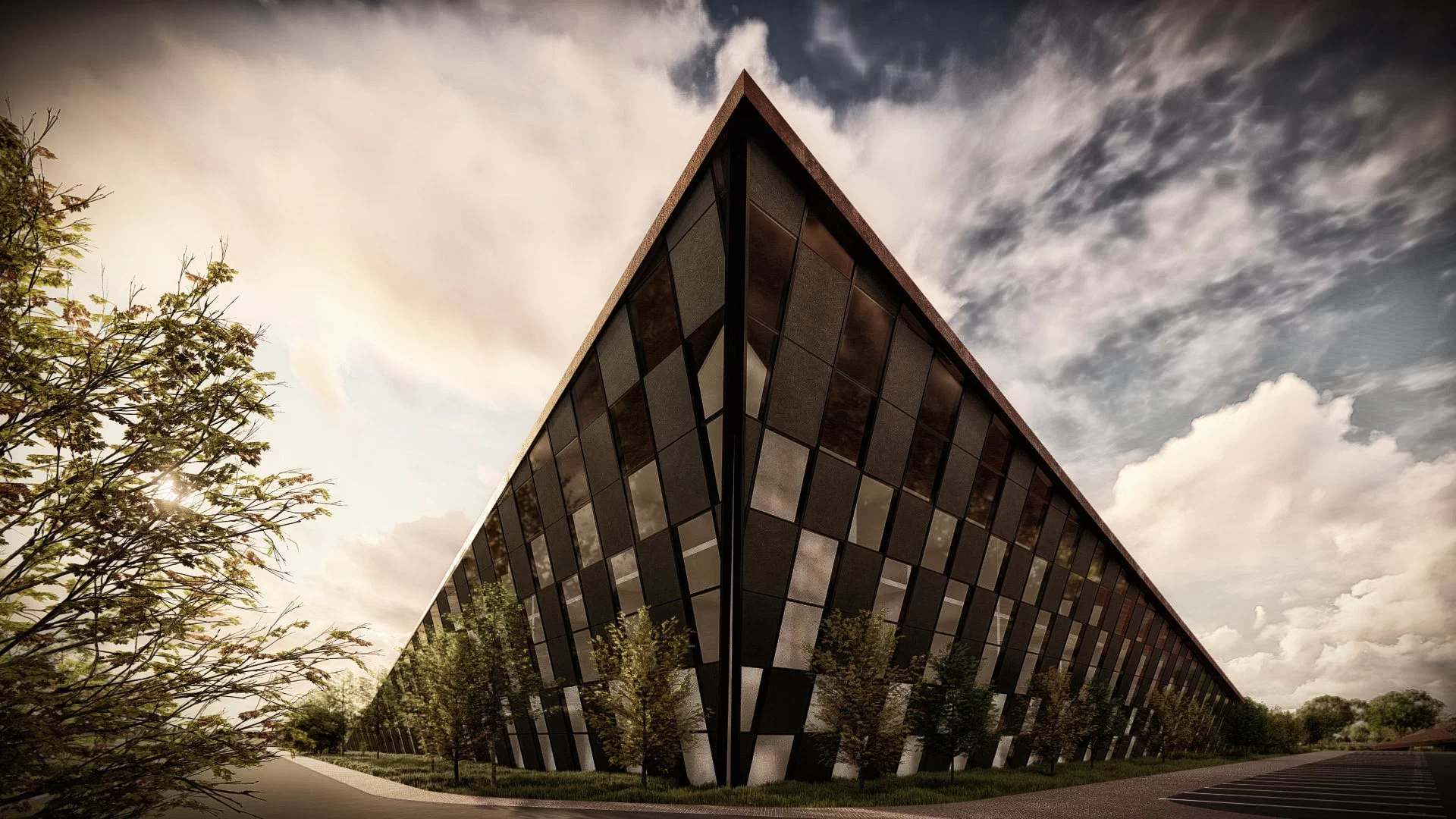
The second concept interprets the transition from steppe civilization to contemporary urban life through the abstraction of the yurt structure. The project reimagines the yurt as a modern monolithic form emerging from and shaped by the surrounding land. Earth movements deform the original circular geometry, transforming it into a dynamic pyramidal and spiral composition. At the center of the project, a public courtyard and marketplace function as a contemporary urban square, encouraging social interaction and daily activity. A continuous shell structure unifies hotel, office and residential functions while creating a strong architectural silhouette. The spiral circulation system enhances pedestrian movement and strengthens the relationship between public spaces and commercial areas, transforming the project into an iconic and active urban destination.


Project Photos - Concept 03
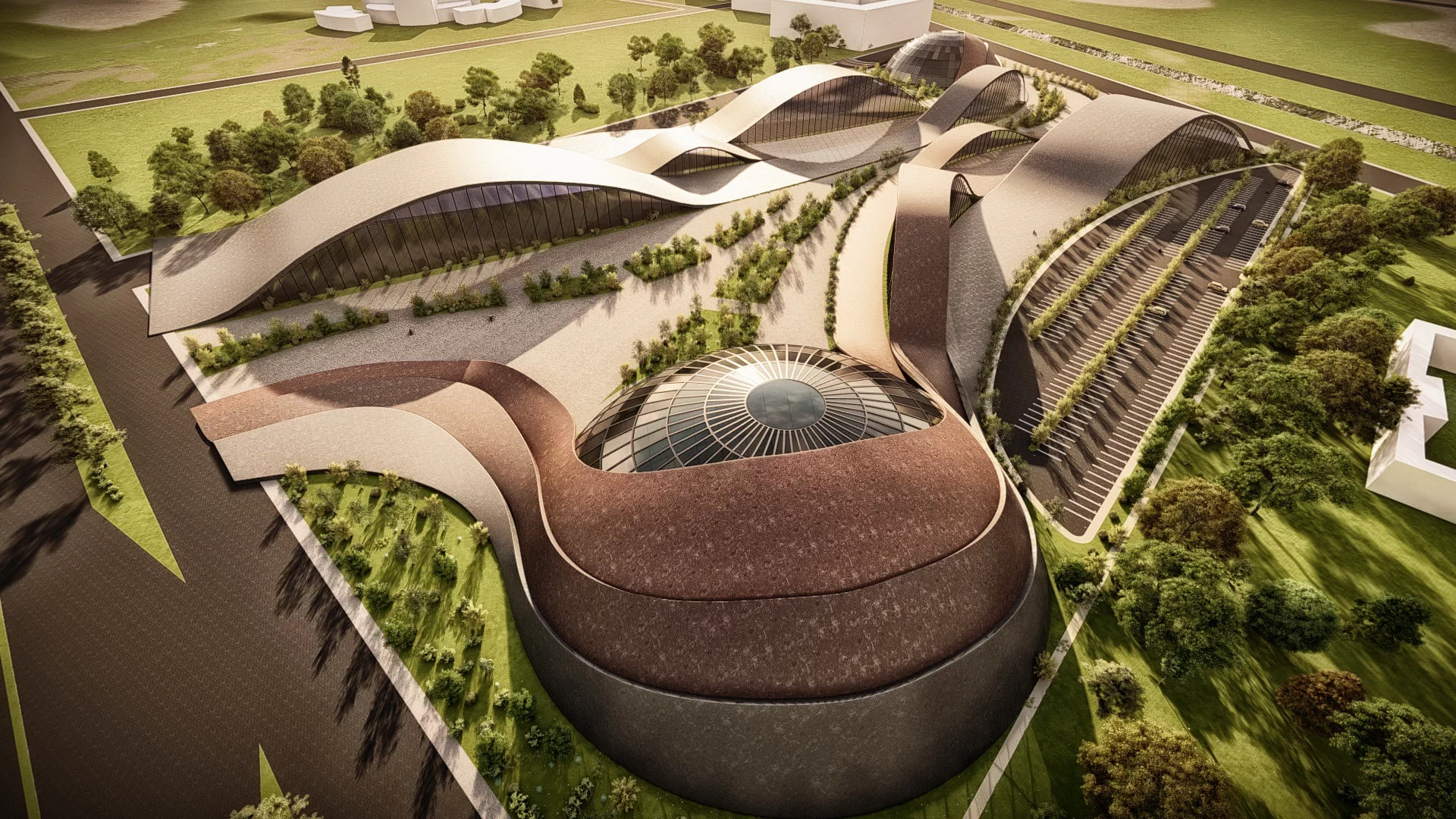
The third concept explores the idea of cultural origins emerging from the depths of the land. Inspired by the layered formation of the earth and the traditional wrapping of felt layers around the yurt, the project envisions architectural forms rising through and being enveloped by landscape layers. Domed structures housing the market and entertainment functions emerge as contemporary interpretations of the yurt, while hotel, residential and commercial buildings are integrated beneath the layered land formations. These layers define shaded public spaces, pedestrian routes and recreational areas, forming a landscape that actively shapes urban life rather than merely surrounding it. The central pedestrian axis functions as a public square connecting different levels of the site, reinforcing social interaction and continuity between built form and landscape. The concept represents the rebirth of cultural identity through contemporary architecture, where roots embedded in the land evolve into a modern urban environment.


Let’s Create Something Extraordinary Together
Tell us about your project and goals — we’ll respond with a tailored approach.
Meydan Sok. No:3 Kat:13
Maslak, İstanbul / TURKIYE
34485