Scope of Work
This project involved the interior architectural design and full implementation of our own two-story office in Safranbolu, with a total floor area of 30 m² per level.
The conceptual starting point was directly derived from our company’s core expertise: the design and construction of timber and steel structures. In order to reflect this identity spatially, wood — our primary construction material — became the defining architectural element of the interior.
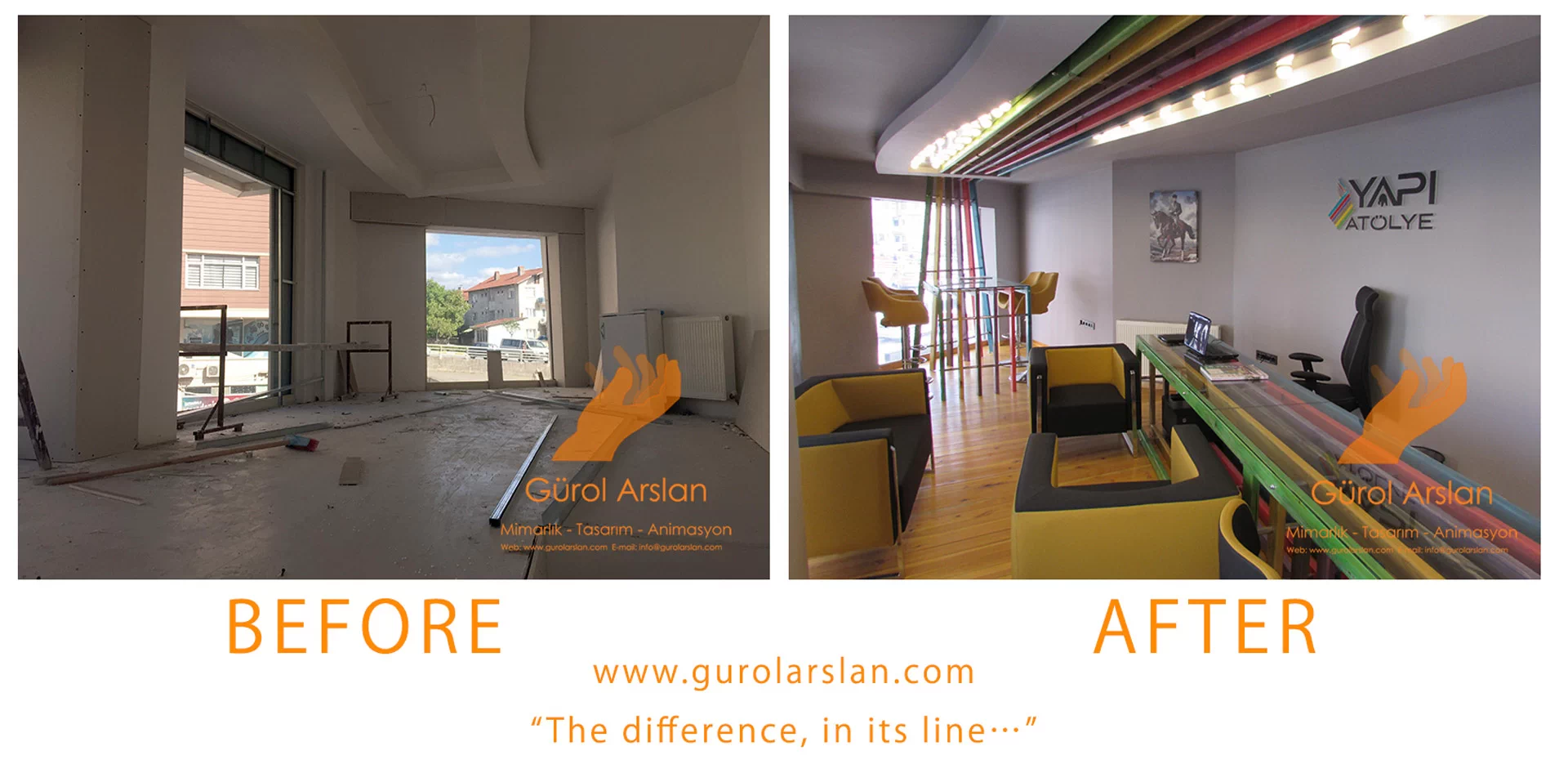
Due to the irregular and narrow geometry of the space, conventional furniture layouts would have allowed a maximum of three workstations. To overcome this spatial limitation, a continuous linear workspace system was developed using 5x10 cm timber sections assembled side by side. This custom-designed element extends uninterrupted from one end of the space to the other, functioning simultaneously as a desk-height surface and as a ceiling feature, creating a strong architectural axis within the compact volume.
Six adjacent timber members were arranged in sequence and painted in varying tones, forming a rhythmic linear composition. This integrated wooden structure generated four workstations, a four-person high seating area, and an additional waiting zone on the ground floor — comfortably accommodating up to nine users within a highly compact footprint. The elevated seating area near the entrance was intentionally designed to create a warm, café-like atmosphere, allowing guests to feel relaxed and engaged in conversation.
Wood flooring and fully clad wooden stairs further reinforced material continuity. The same design language was extended to the upper level, where a management office and complementary seating areas were organized within the same linear timber concept.
By allowing the material to transition seamlessly from desk to wall to ceiling, the project achieved a compact yet expressive spatial identity. Custom-designed adjustable arm lighting fixtures were integrated into the ceiling, supporting the spatial concept while providing flexible illumination. This approach contributed to an economical, distinctive, and timeless interior adaptable to different sectors.
In contrast to many contemporary interiors that lose identity and require renewal every few years, this project demonstrates how unconventional use of a fundamental material can create a durable architectural character. Beyond aesthetics, the design also maximized spatial efficiency, significantly increasing the number of simultaneous users within a highly constrained area.
♦ Interior architectural concept development ♦ Spatial planning within irregular and compact geometry ♦ Custom-designed continuous timber workspace system ♦ Furniture design and material detailing ♦ Full interior implementation and material coordination